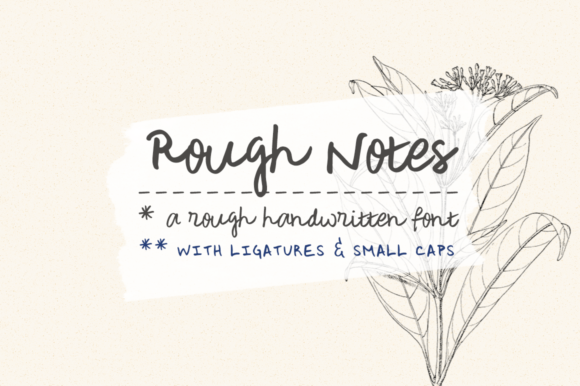
Rough Notes: A Whimsical Handwritten Font for Modern Design
Imagine a font that captures the spontaneous charm of a handwritten note yet maintains the polish needed for professional graphic design. That's the unique appeal of Rough Notes, a cute, casual, and friendly handwritten typeface. Its modern yet whimsical style instantly immerses designs in a magical, approachable world, making it a versatile creative asset for designers seeking to add personality and warmth to their visual communication.
Why Whimsical Typography Matters in Branding
In a digital landscape saturated with sterile, geometric sans-serifs, a font like Rough Notes offers a powerful counterpoint. It injects humanity and authenticity into a brand identity, helping businesses forge a stronger emotional connection with their audience. This style of typography is particularly effective for brands aiming to appear friendly, creative, and approachable—from artisan bakeries and boutique studios to indie bookshops and lifestyle blogs. The key is aligning the font's personality with your brand's core message.
Practical Applications for Creative Projects
The true value of a design asset lies in its application. Rough Notes excels across a wide range of creative projects, enhancing both aesthetics and user engagement. Consider these practical uses:
- Logo Design & Wordmarks: Create a distinctive, memorable logo that feels handcrafted and personal.
- Social Media Graphics: Design eye-catching Instagram stories, quote posts, and announcements that stand out in the feed with a personal touch.
- Website & UI Design: Use for headings, pull quotes, or special feature text to break the monotony of body copy and guide the user's eye.
- Packaging Design: Ideal for product labels, hang tags, and thank-you notes that enhance the unboxing experience.
- Editorial Layouts & Presentations: Add flair to magazine layouts, blog headers, or slide decks to make information more engaging and digestible.
Integrating a Whimsical Font into Your Design Workflow
Successful integration of a handwritten font requires thoughtful consideration. First, ensure it complements your existing color palette and imagery. A whimsical font often pairs well with clean, simple layouts to avoid visual clutter. Pay close attention to visual hierarchy; use Rough Notes for accent elements rather than lengthy paragraphs to maintain readability and impact. Always test its scalability across different mediums—from a tiny favicon to a large poster—to ensure legibility is preserved.
When evaluating any creative asset, ask: Does this support my design goals? Does it resonate with my target audience? A font like Rough Notes is perfect for projects where warmth and approachability are paramount, but may not suit a formal corporate report. Its strength lies in its ability to tell a story, making it a superb choice for brand storytelling, marketing campaigns, and digital products that aim to delight.
Ultimately, the most effective visual design is intentional. Selecting typography and creative assets that thoughtfully align with your brand's voice and audience expectations transforms a good design into a great one. A resource like Rough Notes, when used strategically, does more than just decorate—it communicates, connects, and elevates the entire user experience, proving that the right details make all the difference.